-
CNC Machining Parts
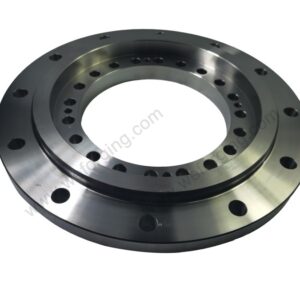
Precision Machined Forged Steel Rings | ±0.1mm Tolerance
-
CNC Machining Parts
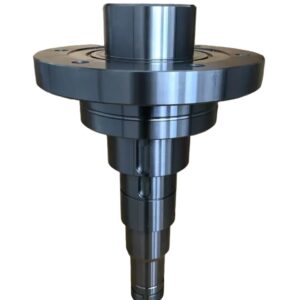
Forged Steel Rotor Shafts | Precision CNC Machining
-
CNC Machining Parts
CNC Machined Irregular Forgings – Precision Engineered Metal Parts
-
CNC Machining Parts
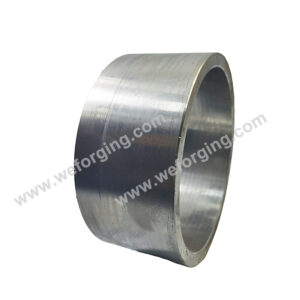
Forged Cylinder Liner | Engine Cylinder Sleeve Manufacturer
-
CNC Machining Parts
Custom Forged Rod Heads | CNC Turning & Milling for High-Strength Joints
-
CNC Machining Parts
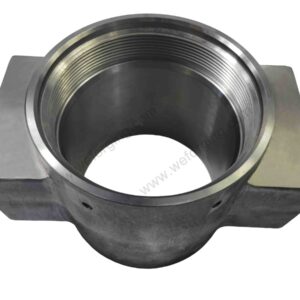
Forged Steel Valve Body | CNC Machined Fluid Components
-
CNC Machining Parts
Industrial Piston Rod | Forged Steel CNC Machined | Chrome Plated
-
CNC Machining Parts
Custom Hydraulic Cylinder Tail | CNC Machined Forged End Cap
-
CNC Machining Parts
Flange Coupling Hub | CNC Machined Forged Steel Shaft Connector
-
CNC Machining Parts
CNC Machined Round Flange | Forged Steel Precision Part
CNC Machined Forged Parts for OEM Applications
CNC machined forged parts are widely used in industrial and OEM applications where structural strength and dimensional accuracy must be achieved together. By combining forging with CNC machining, manufacturers can form load-bearing geometries first and then refine critical features through precision machining. This integrated manufacturing approach supports consistent quality, controlled tolerances, and reliable assembly performance across complex components. At Weforging, CNC machining is coordinated with forging processes to support custom-engineered parts for heavy-duty equipment and long-term industrial use.
What Are CNC Machined Forged Parts?
CNC machined forged parts are components manufactured through a combined process in which metal is first shaped by forging and then finished through CNC machining. The forging stage forms the basic geometry and supports controlled material flow, while CNC machining refines critical dimensions, interfaces, and functional features. This manufacturing route builds upon the structural foundation of hot forged components and enables precise dimensional control for OEM applications.
Why Combine Forging and CNC Machining?
Forging and CNC machining address different aspects of component manufacturing. Forging establishes the internal structure and load-bearing geometry, while CNC machining provides dimensional control and surface accuracy. When combined, these processes support components that are structurally robust and dimensionally precise.
For OEM programs, this integrated approach helps coordinate material utilization, machining allowances, and final tolerances. It also supports efficient transitions from forged blanks to semi-finished or fully machined parts, depending on project requirements.
Typical CNC Machined Forged Components We Produce
Weforging manufactures a wide range of CNC machined forged components tailored to OEM specifications, including:
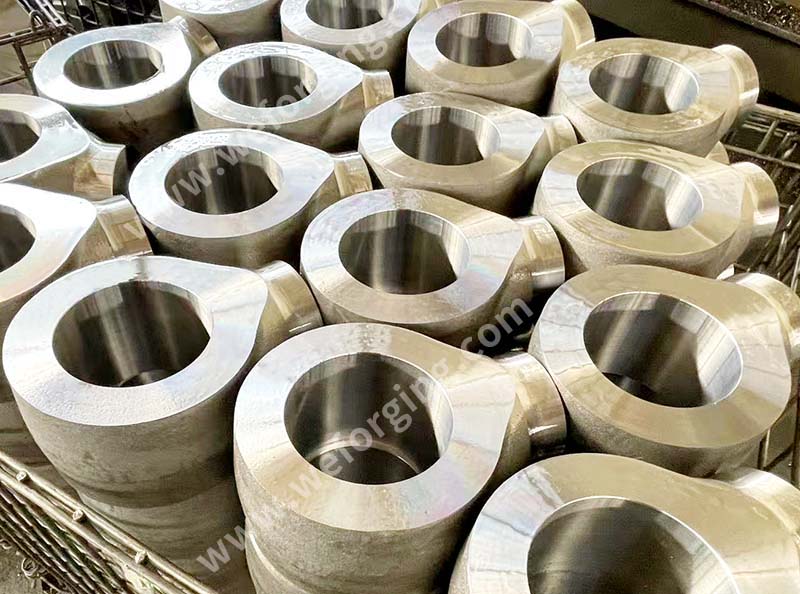
CNC machined forged flanges and round rings
Forged steel shafts and stepped shafts with precision machining
CNC machined hydraulic cylinder parts, such as rod ends, end caps, and liners
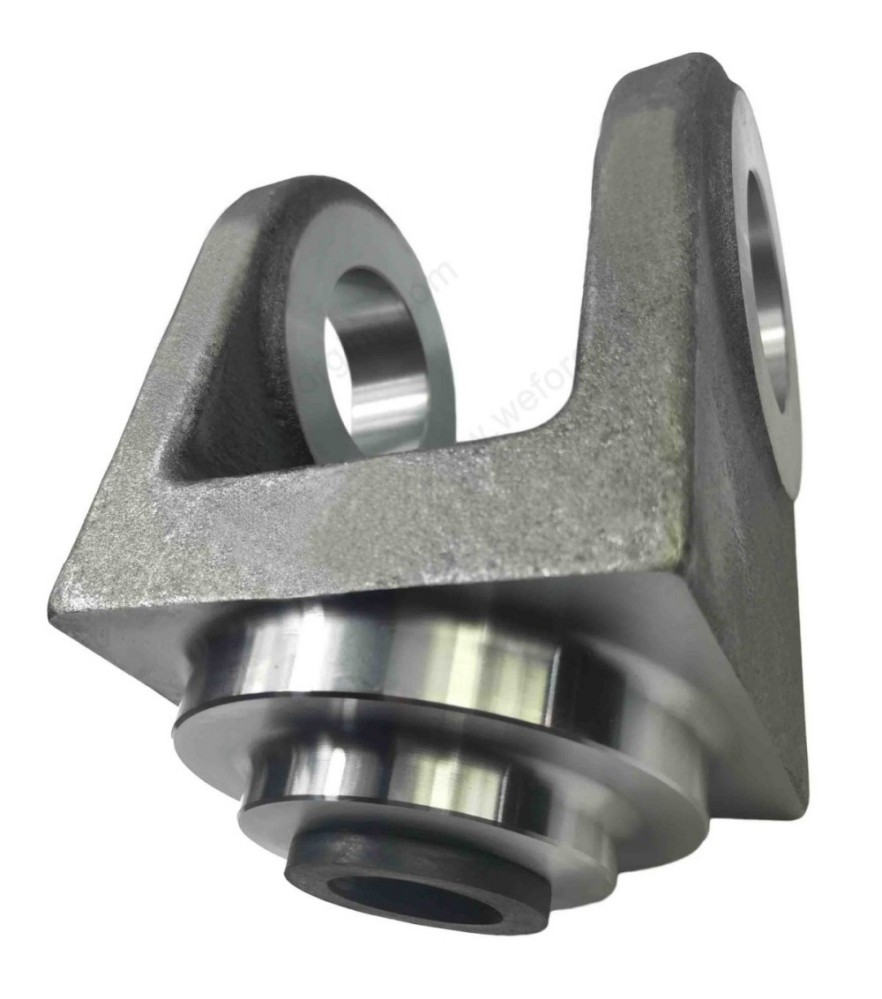
Forged irregular components requiring multi-axis CNC machining
These components are produced based on customer drawings and technical requirements, with machining operations coordinated to the forged geometry.
Manufacturing Process: Forging, Machining & Finishing
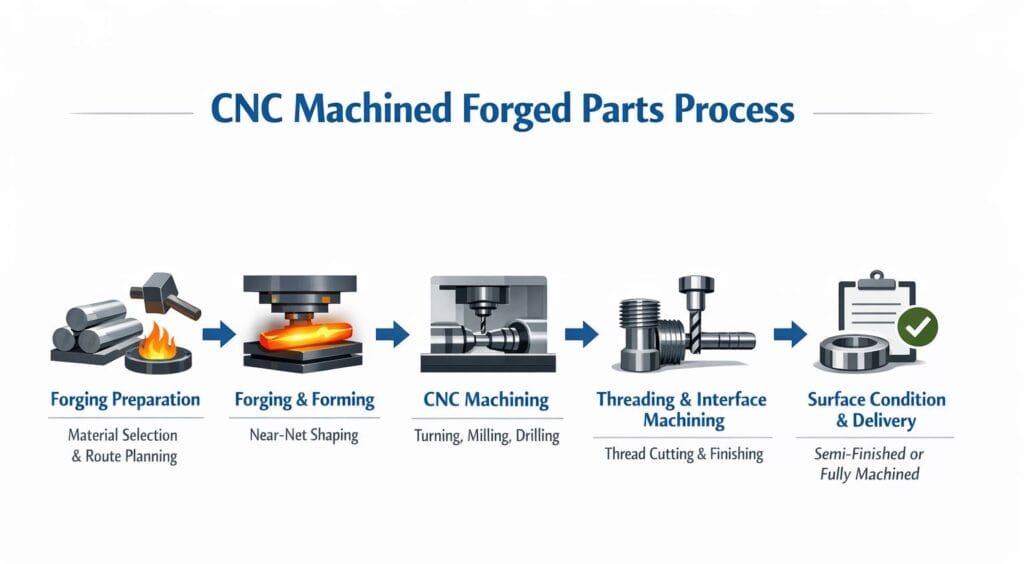
The manufacturing of CNC machined forged parts follows a coordinated process flow:
Forging preparation – material selection and forging route planning
Forging and forming – shaping the component to near-net geometry
CNC machining – turning, milling, boring, or drilling based on part design
Threading and interface machining – where required for assembly
Surface condition and delivery – supplied as semi-finished or fully machined parts
This process coordination supports repeatable geometry and controlled dimensional transitions.
Materials and Machining Capabilities
Material selection aligned with function and load
Carbon and alloy steel grades are selected based on component function, load conditions, and service environment, and coordinated with forging and machining processes.Forging and machining planned as one system
Material grades, forging routes, machining allowances, and tolerances are defined in advance to support stable geometry and predictable machining behavior.CNC machining matched to forged geometry
Turning, milling, drilling, boring, and multi-axis machining are applied based on forged shapes and functional features rather than generic machining methods.Flexible delivery states for OEM programs
Parts can be supplied as forged blanks, semi-finished components, or fully machined parts to match OEM assembly and integration requirements.
Quality Control and Dimensional Consistency
Quality control is integrated throughout the manufacturing process of CNC machined forged parts, with dimensional verification applied at defined production stages. These practices are aligned with our overall quality control and inspection processes to support batch consistency and reliable OEM assembly performance.
Key quality control practices include:
Incoming material verification
Raw materials are checked against specified grades and basic properties to ensure alignment with forging and machining requirements.In-process dimensional checks
Critical dimensions are verified after forging and during CNC machining to confirm machining allowances, interfaces, and tolerance control.Interface and fit verification
Functional surfaces and mating features are checked to support proper alignment and compatibility during OEM assembly.Process consistency and traceability
Manufacturing records and batch identification are maintained to support consistent output across repeat production runs.Final dimensional confirmation
Completed parts are reviewed to confirm overall geometry and dimensional conformity prior to delivery.
This structured quality control approach helps maintain predictable dimensional results and supports reliable integration of CNC machined forged parts into OEM systems.
Applications of CNC Machined Forged Parts
CNC machined forged parts are commonly applied in:
Construction machinery
Industrial transmission and drive assemblies
These applications benefit from the combination of forged structural integrity and CNC machining accuracy.
Conclusion
CNC machined forged parts provide a practical manufacturing solution for OEM applications that require both structural performance and dimensional precision. By integrating forging and CNC machining, Weforging supports a wide range of industrial components with coordinated process control.
For projects involving custom CNC machined forged parts, technical drawings and requirements may be submitted through the inquiry form below for engineering review and manufacturing coordination.